Colloquies
KEYWORDS
COLLOQUY
Blogging Global Legal Histories
ANT.E Symposium
Join us for our international symposium: “Areas, Norms, Time: Entangled. Blogging Global Legal Histories” on Thursday 3rd and Friday 4th December 2026 at the University of Vienna, Austria.
Register by email to: ante.rg@univie.ac.at

Program & Registration
A renowned keynote speaker and three interactive expert panels are set to inspire lively debates.
Register by email to:
ante.rg@univie.ac.at

Organizers & Speakers
Co-organized by the University of Vienna, Austria, and Tilburg University, The Netherlands, the symposium brings international panelists to Vienna.

Venue & Access
The Old Chapel is one of Vienna University’s historic event venues. It is located on the Campus, the site of the former general hospital, which also hosts a Christmas market in December.

Mission & Process
One year after the launch of our blog, we explore how to write global legal histories today and give you insights into our blogging process. We invite you to add your voice to the conversation!
COLLOQUY
Negotiating Sovereignties
Legal Orders Under Pressure
Two countries, three periods, one struggle: to assert sovereignty. In Qing and interwar China and in Morocco, this contest was intertwined with intermediary institutions, territorialization, and the stickiness of inequality.

Legal Order from Disorder: The Chinese Maritime Customs Service
Shaped mostly by foreigners and wedged between the Qing court and the British Empire, the CMCS leveraged its intermediary position to become a driving force of legal transformation in late Qing China.

Negotiating the Sultan’s Sovereignty under European Imperialism in Morocco
In 19th century Morocco, the conception of the Sultan’s sovereignty emerged at the intersection of Islamic legal authority and the realities of European imperial power.

Inequality and its Afterlives: China’s “New Treaties”, 1921-1946
Although presented as formally equal, the “new treaties” between 20th century China and European powers contained new grammars of international law that continued to reinforce imperial hierarchies.

Comment: Sovereignty and Legal Transformation – Beyond the Binary
Scrutiny of the international arrangements under which formal sovereign equality was achieved reveals persistent underlying inequalities and the instable, continually negotiated, often layered nature of sovereignty.
COLLOQUY
Repurposing Constitutional Vocabularies
Legal Orders Under Pressure
With imperialism and colonialism serving as potent transmitters of Western ideas of constitutionalism, we look at how these ideas were plucked apart and made useful for local legal traditions and political needs.

Intro: Creatively Negotiated Transformations
In Iran, Siam, Egypt, and beyond, Western ideas of constitutionalism were not simply absorbed unilaterally, but instead thoughtfully woven into existing frameworks by local actors and often repurposed in the process.

Mirza Malkom Khan and the Politics of Legal Reform in 19th Century Iran
Threats to Iran’s independence, as well as arbitrariness resulting from its non-codified legal system, led to discussions on reforms that would combine both Western ideas and shari‘a precepts.

The Constitutional Petition That Changed Everything in Siam (Or Did It?)
Urged by his diplomats to perform legal modernity so as to avoid colonial intervention in the late 19th century, Siam’s king instrumentalised Western standards to strengthen Buddhist kingship instead.

Constitution as Method in 1880s Egypt
While Euro-American constitutional ideas were certainly present in late 19th century Egypt, it was preexisting concepts of Islamic legal tradition, expanded upon by local scholars, that infused them with enforcement power.
COLLOQUY
Ants and Announcements
ANT.E Symposium
If you’ve been wondering, “What’s the deal with the ant?” – this month, we’re sharing some of the thoughts that went into choosing our icon. Also, save the date: From 3-4 December 2026, we’ll be hosting a symposium at the University of Vienna, co-organised with Tilburg University.

Symposium: Blogging Global Legal Histories
Save the date: Join us in Vienna from 3-4 December 2026 to reflect on our first year of blogging global legal histories.

How the Ant Came to Be in ANT.E
In the early days of our blog, we spent countless hours pondering over our name and icon, but when we found the ant in ant.e, it all fell into place.
COLLOQUY
Forced and Forged Bridges of International Law
International Law
Three tales about the double-edged role of international law as it was being negotiated and shaped – between a gateway to asserting sovereign rights and an instrument for consolidating structures of asymmetry

The María Luz Case: International Emergence of Japanese Legal Identity
At a time of political unrest and legal restructuring, Japan first entered the stage of international dispute resolution with the María Luz case, proving its mastery of the rule of law in the face of supposed Western superiority.

Western International Law in 19th Century Chosŏn: Forced or on Initiative?
Belated and fraught engagement with Western international law in Chosŏn (Korea) underscored the challenges faced by small nations in asserting their sovereignty amid imperial pressures and shifting global norms.

The Tehran School and International Law in Early 20th Century Iran
More than just a training ground for diplomats, the Tehran School of Political Science sparked a new era of legal thought and political reform in Iran, shaping the country’s legal system and global standing in a rapidly changing world.

Comment: International Law in Three Histories
The spread of Euro-American “law among nations” was not just imposed; it also reflected internal demands in many countries, even if they came in the context of unequal treaties, the threat of war, or existential dread.
COLLOQUY
Unseen Agencies of Transformation
Legal Orders Under Pressure
An exploration of how non-Western societies engaged with legal modernity in the 19th and early 20th centuries – not as passive recipients of European norms, but as active participants negotiating legal change on their own terms

Intro: Legal Reforms as Reorganisation of Order
Economic rationality, moral imagination, and institutional experimentation emerged in various forms throughout the non-Western world, often well before or independently of direct colonial rule or Western intervention.

Merchants, Local Elites, and New Commercial Litigation in the Ottoman Balkans
A fresh look at how the first commercial courts were established in the 1840s-50s reframes Tanzimat-era judicial reforms as evolving practices shaped by provincial actors, challenging narratives of centrally mandated Westernization.
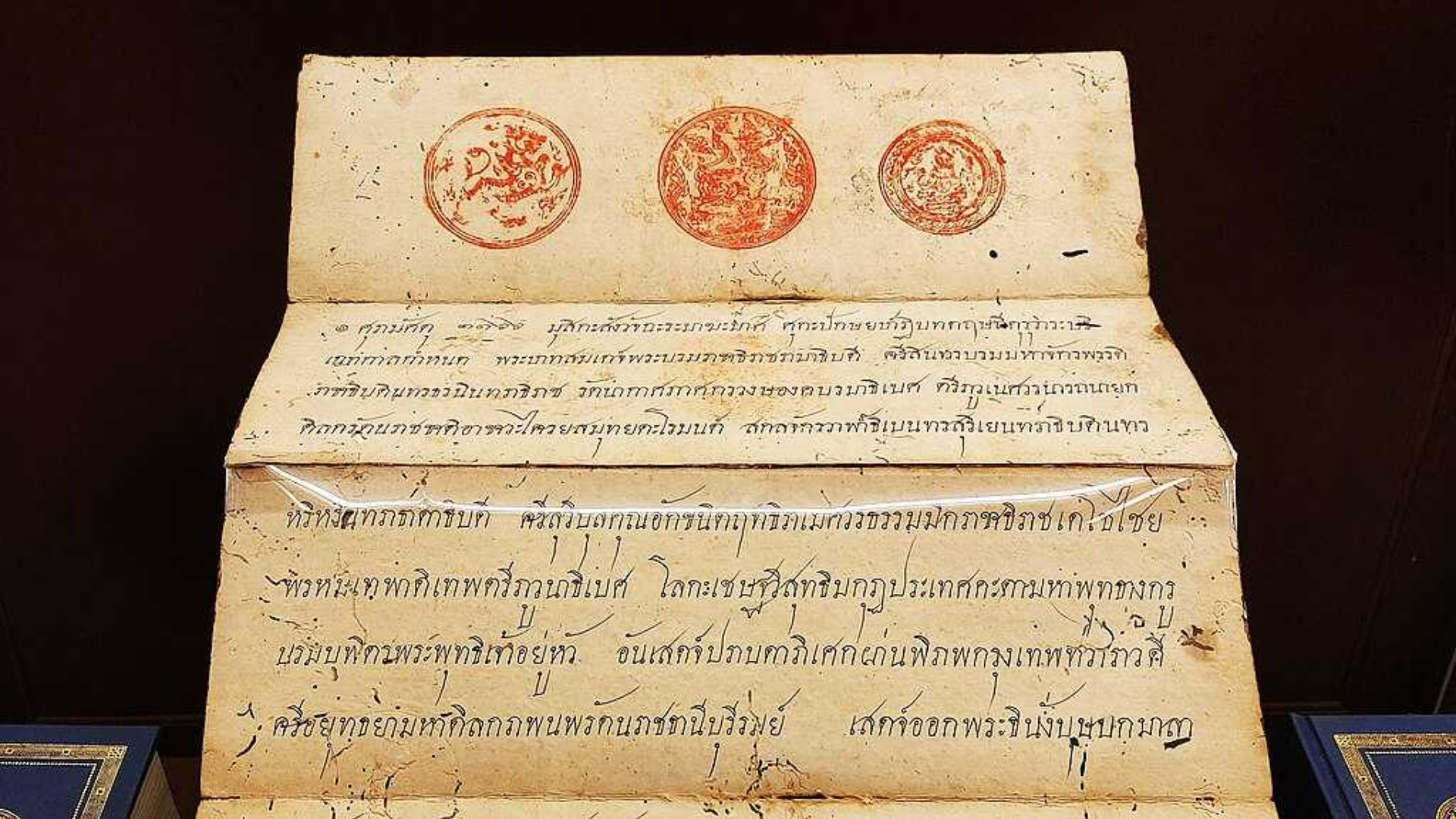
Siam’s Tectonic Legal Reform Process
Two key aspects are at the heart of this analysis of legal transformation in Siam in the late 19th and early 20th centuries: the “elastic” nature of Siam’s traditional law and the role of lawyers in shaping legal change.

European Imperialism and Legal Transformation in 20th Century Ethiopia
Encountering informal legal imperialism, Ethiopia sought to evade informal colonisation, and strategically appropriated and redeployed imported legal ideas and institutions.